Most approaches stop at the behaviour itself. I work with what's keeping it in place — the meaning a situation carries, the state it triggers, and the identity it confirms. Shift those, and the pattern lets go on its own.
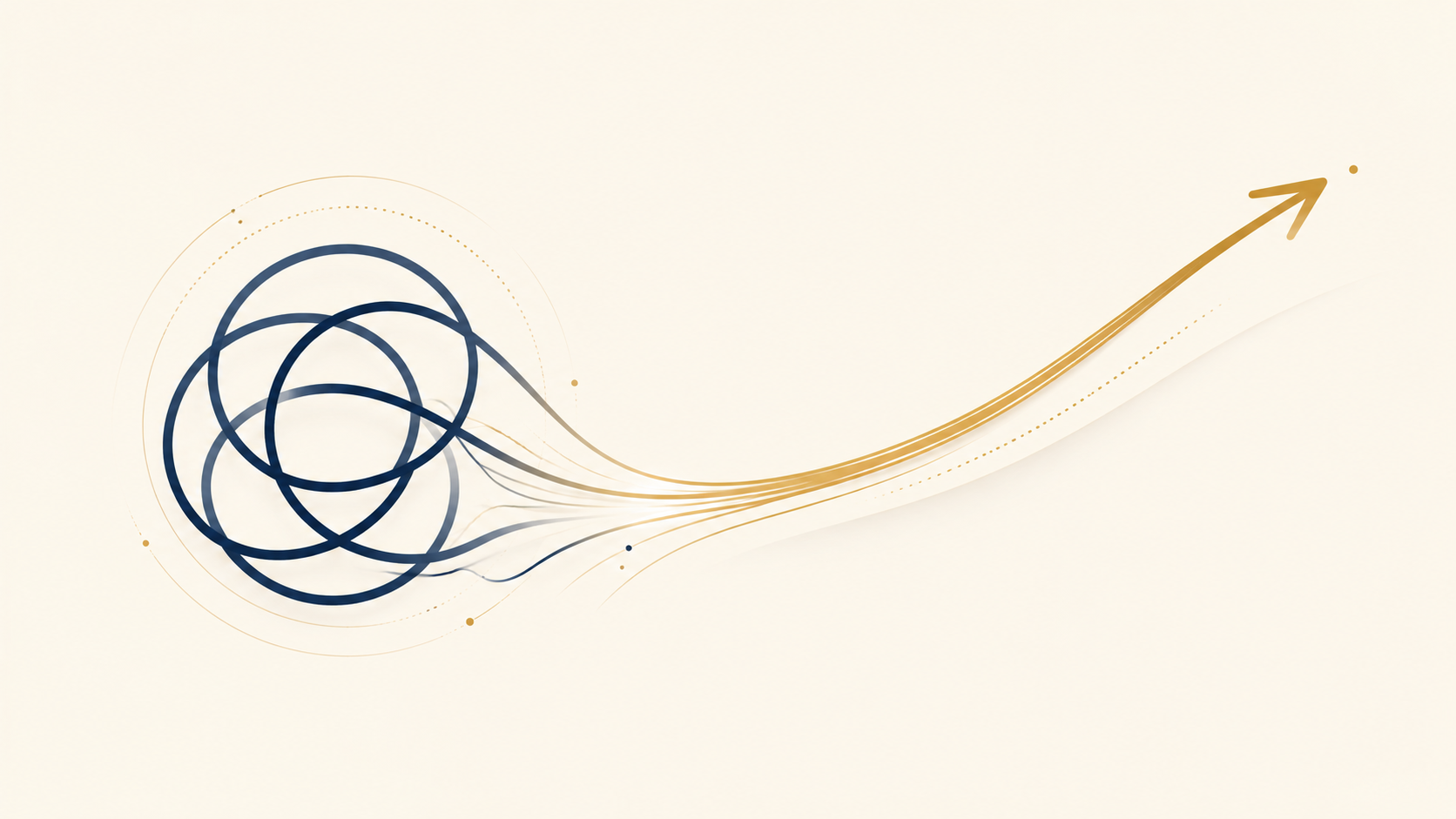
Patterns are not random. They are driven by a structure that runs faster than conscious thought — a set of meanings, states, and beliefs operating quietly in the background for years.
A situation triggers a meaning — the end of a hard day means you have earned something. That meaning produces a state: relief, reward, release. The state confirms a belief about who you are: someone who copes this way. And the behaviour — the snack, the drink, the spend, the scroll — follows as if there was never a choice.
That is not a discipline problem. It is a structure problem. And structure can be changed.
The aim is not endless analysis. It is to create more choice in the moment where the old pattern used to run.
Two decades of studying how that structure forms — in research on identity and behaviour, in building a business across language and culture, and in working through my own patterns — is what this approach is built on.
This work suits people who are already self-aware and have done some work on themselves — and who have reached the point where understanding the pattern is no longer the problem.
If you can describe exactly what keeps happening but cannot make it stop, that is the right starting point.